
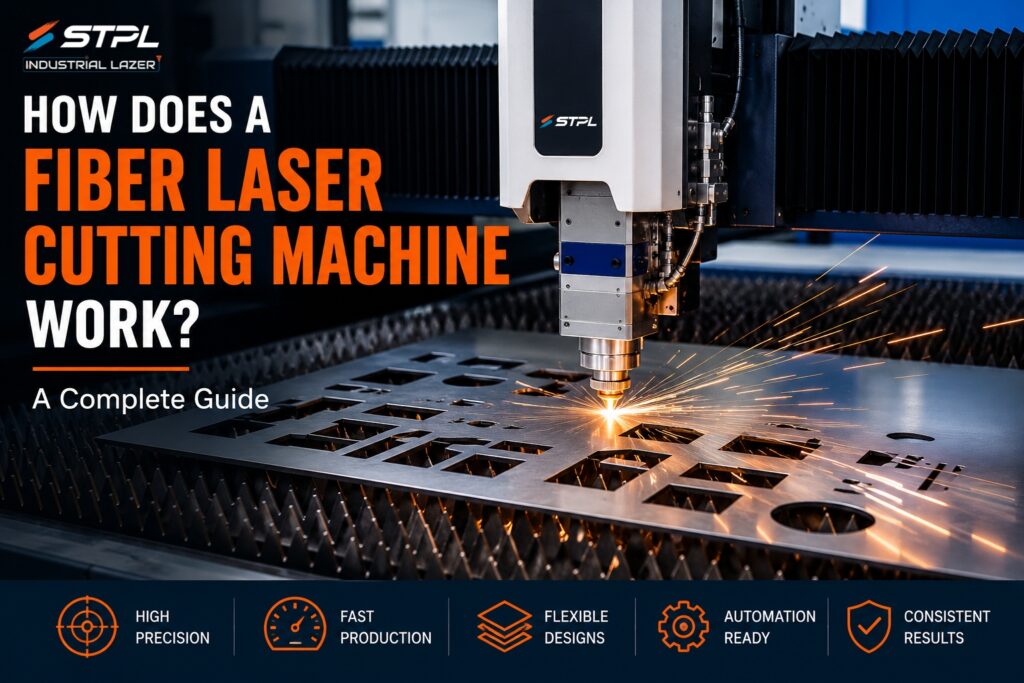
Fiber laser cutting is widely used in modern metal fabrication because it can produce precise, fast, and repeatable cuts. But how does a fiber laser cutting machine actually work?
A fiber laser cutting machine uses a high-power laser beam to heat and cut metal. The beam is focused through a cutting head, assist gas helps remove molten material, and a CNC system controls the cutting path according to the programmed design.
This guide explains the basic working process, main components, materials, benefits, and applications of fiber laser cutting machines.
What Is a Fiber Laser Cutting Machine?
A fiber laser cutting machine is a CNC-controlled machine used to cut metal with a concentrated fiber laser beam.
Unlike mechanical cutting, laser cutting is a non-contact process. The focused laser heats the metal at a very small point until it melts, while assist gas helps clear the molten material from the cutting area.
Fiber laser cutting machines are commonly used in sheet-metal fabrication, automotive manufacturing, electrical panels, industrial machinery, engineering, and other metal-processing applications.
How Does a Fiber Laser Cutting Machine Work?
The cutting process can be understood in five basic steps.
1. Laser Generation
The process starts with the fiber laser source, which generates a high-intensity laser beam.
The concentrated energy allows the machine to heat a small area of the metal, making precise cutting possible.
2. Beam Focusing
The laser beam travels to the cutting head, where optical components focus it onto the metal surface.
Proper focusing creates a high energy density at the cutting point. The focus position is adjusted according to the material and thickness being processed.
3. Melting and Cutting
The focused laser heats the metal rapidly until it melts at the cutting point.
As the cutting head moves along the programmed path, the laser creates the required shape, including straight cuts, holes, curves, and complex profiles.
4. Assist Gas Removes Molten Material
Assist gas is delivered through the cutting nozzle around the laser beam.
Oxygen, nitrogen, or compressed air may be used depending on the material and cutting requirements. The gas helps remove molten metal and can affect cutting speed and edge quality.
5. CNC Controls the Cutting Path
The required design is converted into machine instructions before cutting begins.
The CNC system then controls the movement of the cutting head along the programmed path. This allows manufacturers to produce complex and repeatable components accurately.
Main Components of a Fiber Laser Cutting Machine
A fiber laser cutting machine consists of several systems working together:
- Fiber laser source: Generates the laser beam used for cutting.
- Cutting head: Focuses the beam and delivers assist gas.
- CNC control system: Controls the cutting path and machine movement.
- Motion system: Moves the cutting head accurately across the work area.
- Machine bed: Supports the metal sheet during cutting.
- Cooling system: Helps maintain stable operating conditions for heat-generating components.
What Materials Can a Fiber Laser Cutting Machine Cut?
Depending on the laser power and machine configuration, fiber laser cutting machines can process various metals, including:
- Mild steel
- Stainless steel
- Aluminium
- Brass
- Copper
The maximum cutting thickness depends on several factors, including laser power, material type, material thickness, cutting speed, assist gas, and focus settings.
Therefore, the right machine configuration should be selected according to the actual materials and thicknesses required for production.
Benefits of Fiber Laser Cutting
High Precision
The focused laser beam and CNC-controlled movement allow manufacturers to produce accurate and repeatable cuts.
Fast Production
Fiber laser technology can provide high cutting speeds for suitable sheet-metal applications, helping improve production efficiency.
Flexible Designs
Digital cutting paths allow manufacturers to produce different shapes and patterns without creating a separate mechanical tool for every design.
Non-Contact Cutting
Because the laser does not physically touch the workpiece, there is no conventional cutting-tool contact with the metal.
Automation Ready
CNC control and programmable cutting paths make fiber laser systems suitable for repeat production and automated manufacturing environments.
Applications of Fiber Laser Cutting Machines
Fiber laser cutting is used across a wide range of industries.
Sheet Metal Fabrication: Cutting brackets, panels, frames, enclosures, and custom components.
Automotive Manufacturing: Producing various metal components, brackets, panels, and precision parts.
Electrical Panels: Manufacturing electrical cabinets, enclosures, panels, and mounting components.
Industrial Machinery: Producing machine frames, covers, brackets, and other fabricated parts.
Engineering & Manufacturing: Creating customized and precision metal components for different industrial requirements.
What Affects Fiber Laser Cutting Quality?
Cutting quality depends on more than laser power alone. Important factors include:
- Laser power: Influences the machine’s cutting capability.
- Material and thickness: Different metals require different cutting parameters.
- Cutting speed: Must be matched to the material and thickness.
- Focus position: Helps concentrate laser energy correctly.
- Assist gas: Gas type, pressure, and flow can affect the cut.
- Nozzle condition: Proper alignment and maintenance help maintain consistent cutting.
- Machine stability: The machine structure and motion system contribute to repeatable results.
Frequently Asked Questions
How does a fiber laser cutting machine work?
It generates a high-energy laser beam, focuses it onto the metal, melts the material, and uses assist gas to remove molten metal. A CNC system controls the cutting path.
What metals can a fiber laser cutting machine cut?
Depending on the machine configuration, it can cut materials such as mild steel, stainless steel, aluminium, brass, and copper.
Is fiber laser cutting suitable for sheet metal?
Yes. It is widely used for sheet-metal fabrication because it can produce accurate, repeatable cuts and complex shapes from digital designs.
What determines cutting thickness?
Laser power is important, but material type, thickness, cutting speed, assist gas, focus position, and machine configuration also affect cutting capacity.
How do I choose the right fiber laser cutting machine?
Consider the materials and thicknesses you need to cut, sheet size, production volume, required speed and accuracy, and automation requirements before selecting the machine configuration.
Conclusion
A fiber laser cutting machine combines a laser source, cutting head, assist gas, CNC controls, motion system, and machine structure to produce precise cuts in metal.
The process begins with generating and focusing the laser beam, followed by controlled melting and removal of material. The CNC system guides the cutting head according to the required design, enabling accurate and repeatable production.
For manufacturers working with metal sheets, selecting the right fiber laser cutting machine depends on the material, thickness, sheet size, production requirements, and desired level of automation. STPL offers fiber laser cutting solutions for industrial metal-processing applications, with different machine configurations available for different production needs.