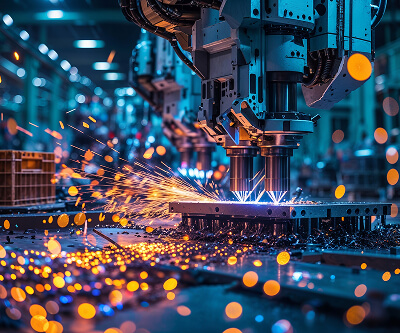

Laser cutting has become an important technology in modern metal manufacturing. Among the most widely known laser cutting technologies are fiber laser cutting and CO2 laser cutting.
Both technologies can produce accurate and high-quality cuts, but they work differently and have different advantages. Choosing between them depends on the material, thickness, production requirements, operating costs, and the type of application.
So, fiber laser cutting vs CO2 laser cutting — which is better for metal?
For many modern metal fabrication applications, fiber laser cutting offers advantages in cutting speed, energy efficiency, maintenance, and performance on reflective metals. However, CO2 lasers can still be useful for certain applications and materials.
In this guide, we compare both technologies to help you understand which laser cutting solution may be better for your requirements.
Fiber laser cutting vs CO2 laser cutting depends on factors such as material type, thickness, cutting speed, energy efficiency, and production requirements.
When comparing fiber laser cutting vs CO2 laser cutting, fiber lasers are often preferred for modern metal fabrication because of their speed and energy efficiency.
What Is Fiber Laser Cutting?
A fiber laser cutting machine uses a solid-state laser source to generate a high-intensity laser beam. The beam is delivered through an optical fiber and focused onto the metal surface through a cutting head.
The concentrated laser energy heats and melts the material at the cutting point. Assist gas helps remove the molten material while the CNC system controls the cutting path.
Fiber laser machines are commonly used for materials such as:
- Mild steel
- Stainless steel
- Aluminium
- Brass
- Copper
- Galvanized steel
Fiber lasers are particularly popular in modern metal fabrication because they provide high cutting speeds, precise results, and efficient operation.
What Is CO2 Laser Cutting?
A CO2 laser cutting machine uses a gas mixture, typically containing carbon dioxide, as the laser medium.
The laser beam is generated inside the laser resonator and then directed through mirrors and optical components toward the cutting head.
CO2 laser systems have been used for many years in industrial cutting applications. They can process various materials and have historically been widely used for sheet-metal fabrication.
However, the optical system and gas-based laser source can require more maintenance compared with modern fiber laser systems.
Fiber Laser Cutting vs CO2 Laser Cutting: Key Differences
The main differences between fiber and CO2 laser cutting can be seen in cutting speed, energy consumption, maintenance, material compatibility, and overall operating efficiency.
1. Cutting Speed
One of the major advantages of fiber laser technology is its cutting speed.
Fiber lasers can cut many thin and medium-thickness metal sheets at high speeds. This makes them particularly suitable for production environments where high throughput is important.
CO2 lasers can also produce excellent cuts, but fiber lasers are often faster for many common sheet-metal applications.
Winner: Fiber Laser
2. Cutting Accuracy
Both fiber and CO2 laser machines can provide accurate cuts when properly configured.
Fiber laser technology produces a highly concentrated beam, allowing manufacturers to create detailed shapes, small holes, and precise profiles.
The final cutting accuracy also depends on machine construction, motion control, laser power, material thickness, cutting parameters, and maintenance.
Winner: Fiber Laser for many modern precision metal-cutting applications
3. Energy Efficiency
Energy efficiency is another important difference.
Fiber laser systems generally convert electrical energy into laser energy more efficiently than traditional CO2 laser systems. They also typically require less supporting equipment for laser generation.
Lower energy consumption can help reduce operating costs, especially for machines used for long production hours.
Winner: Fiber Laser
4. Maintenance Requirements
CO2 laser systems use mirrors and other optical components that need regular maintenance and alignment.
Fiber laser systems use an optical fiber to deliver the laser beam, reducing the need for beam-path alignment and certain types of optical maintenance.
This can make fiber laser machines easier to maintain in many industrial environments.
However, routine maintenance is still important for both technologies, including cleaning the cutting head, checking nozzles, maintaining assist-gas systems, and following the machine manufacturer’s maintenance schedule.
Winner: Fiber Laser
5. Reflective Metals
Material compatibility is an important consideration when choosing laser technology.
Fiber lasers are particularly suitable for many reflective metals, including:
- Aluminium
- Brass
- Copper
Modern fiber laser systems are designed to handle these materials more effectively than older laser technologies.
CO2 lasers can process many metals, but reflective materials can present additional challenges depending on the laser system and application.
Winner: Fiber Laser for many reflective-metal applications
6. Operating Cost
The total operating cost of a laser cutting machine depends on several factors, including:
- Electricity consumption
- Maintenance
- Consumables
- Assist gas
- Production volume
- Machine utilization
- Replacement components
Because fiber lasers can offer higher energy efficiency and lower optical-maintenance requirements, they can provide a lower operating cost in many production environments.
The actual cost advantage depends on the machine configuration and application.
Winner: Fiber Laser in many production applications
7. Machine Footprint and System Design
Fiber laser systems can have a relatively compact laser-source and optical-delivery system because the beam is delivered through optical fiber.
CO2 laser systems require a beam path using mirrors and optical components.
This difference can affect machine design, maintenance access, and installation requirements.
Winner: Fiber Laser for many modern machine designs
Fiber Laser vs CO2 Laser Comparison
| Feature | Fiber Laser | CO2 Laser |
|---|---|---|
| Cutting speed | High for many metal applications | Good |
| Energy efficiency | High | Lower |
| Maintenance | Generally lower | Generally higher |
| Reflective metals | Excellent suitability | More challenging |
| Thin sheet cutting | Excellent | Good |
| Precision | Excellent | Excellent |
| Operating cost | Often lower | Often higher |
| Beam delivery | Optical fiber | Mirrors/optics |
| Technology | Modern solid-state | Gas laser |
| Metal fabrication | Excellent | Good |
Which Is Better for Metal Cutting?
For many modern metal fabrication applications, fiber laser cutting is the preferred technology.
Fiber lasers are especially attractive when a manufacturer needs:
- High production speed
- Precise cutting
- Lower energy consumption
- Reduced maintenance
- Processing of reflective metals
- Consistent production quality
- Efficient sheet-metal processing
However, the best solution depends on the specific application. Material type, thickness, required production volume, laser power, machine size, and budget should all be considered before selecting a machine.
When Should You Choose a Fiber Laser?
A fiber laser cutting machine may be a good choice if your business regularly processes metal sheets and requires high production efficiency.
For example, fiber laser technology can be suitable for:
Sheet Metal Fabrication
Manufacturers producing brackets, panels, enclosures, components, and other sheet-metal parts can benefit from fast and accurate cutting.
Automotive Manufacturing
Fiber lasers can be used to produce various metal components and precision-cut parts.
Industrial Machinery
Machine manufacturers often require accurate cutting of different metal components. Fiber laser cutting can support these production requirements.
Electrical Panels and Enclosures
Precise cutting is important when manufacturing electrical cabinets, control panels, and metal enclosures.
General Engineering
Engineering companies can use fiber laser machines for prototypes, custom components, and production parts.
Does CO2 Laser Cutting Still Have Advantages?
Yes.
CO2 lasers are an established technology with a long history in industrial manufacturing. They can still be useful for specific applications, particularly where a company already has CO2 equipment and the system meets its production requirements.
How to Choose the Right Laser Cutting Machine
Before purchasing a laser cutting machine, consider these important factors:
1. Material
Identify which metals you regularly cut, such as mild steel, stainless steel, aluminium, brass, or copper.
2. Material Thickness
Laser power should be selected according to the materials and thicknesses you need to process.
3. Sheet Size
Consider the maximum sheet dimensions your production requires.
4. Production Volume
High-volume manufacturers may benefit from faster cutting speeds and automation.
5. Accuracy Requirements
For precision components, machine construction and motion-control performance are important.
6. Operating Cost
Consider electricity, maintenance, consumables, assist gas, and other ongoing costs.
7. Future Production
Choose a machine that can support your expected production requirements as your business grows.
Fiber Laser Cutting at STPL
STPL Industrial Laser provides fiber laser cutting solutions designed for modern metal manufacturing applications.
Our machine range includes solutions for different sheet sizes, production requirements, and cutting applications, including sheet-metal fiber laser cutting machines, tube cutting machines, and sheet-and-tube dual-use machines.
Depending on your requirements, you can select a machine configuration based on material type, working area, production volume, and required laser power.
If you are unsure which fiber laser cutting machine is suitable for your application, discuss your material and thickness requirements with the STPL team before making a decision.
To understand the working process in detail, read How Does a Fiber Laser Cutting Machine Work?
Frequently Asked Questions
Is fiber laser better than CO2 for metal cutting?
For many modern metal-cutting applications, fiber lasers offer advantages in speed, energy efficiency, maintenance, and reflective-metal processing. However, the best choice depends on the specific application.
Can a fiber laser cut stainless steel?
Yes. Fiber laser cutting machines are widely used for cutting stainless steel, with the appropriate laser power and cutting parameters.
Can a fiber laser cut aluminium?
Yes. Fiber lasers are suitable for aluminium cutting when the machine is properly configured for the material and thickness.
Which laser uses less electricity?
Fiber laser systems generally offer higher electrical efficiency than traditional CO2 laser systems.
Is fiber laser faster than CO2 laser?
For many sheet-metal applications, especially thin and medium-thickness materials, fiber lasers can provide higher cutting speeds.
Which laser requires more maintenance?
CO2 laser systems generally require more optical maintenance because they use mirrors and a longer beam-delivery path. Fiber laser systems typically require less maintenance in this area.
Conclusion
When comparing fiber laser cutting vs CO2 laser cutting, both technologies have their place in industrial manufacturing.
However, for many modern metal fabrication applications, fiber laser technology offers significant advantages in cutting speed, energy efficiency, maintenance, precision, and processing of reflective metals.
The right machine ultimately depends on your material, thickness, production volume, working area, and business requirements.
If you are looking for an efficient solution for modern metal manufacturing, a fiber laser cutting machine can be a strong option for improving production performance and cutting quality.
Need help selecting the right machine? Contact STPL Industrial Laser to discuss your metal-cutting requirements.
If you are selecting a machine for your production needs, read Choosing the Right Fiber Laser Machine.
For most modern metal fabrication applications, fiber laser cutting vs CO2 laser cutting comparison favors fiber lasers because of their speed, efficiency, and performance on reflective metals.